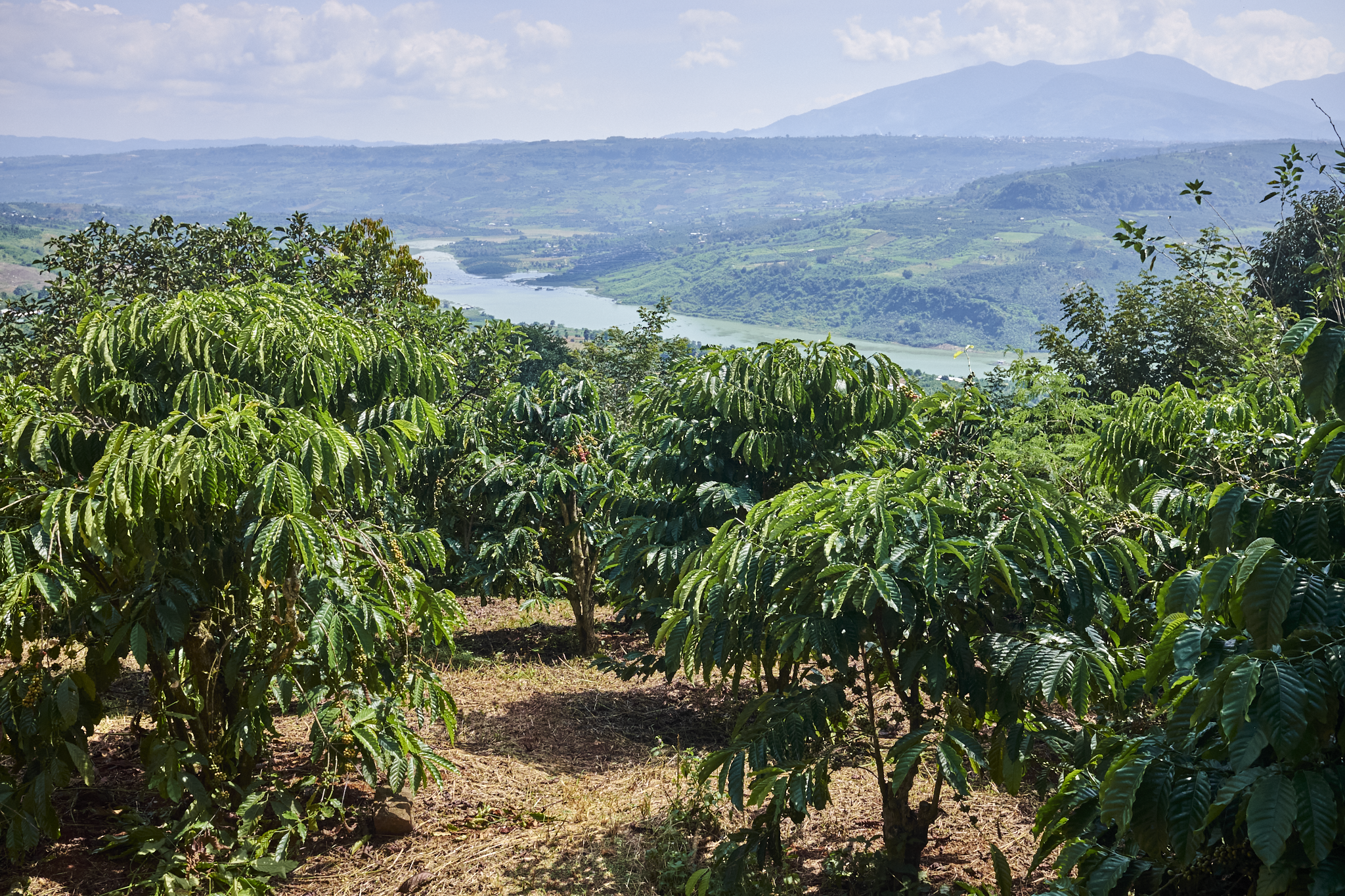
There are three ways to process a coffee cherry after picking: washed, natural, and honey. Most people have heard of the first two. Honey processing sits between them, and it's where a lot of the most interesting flavour work happens.
Here's the simple version. A coffee cherry is a fruit. Inside that fruit is the bean — what ends up in your grinder. Around the bean is a layer of sticky fruit pulp called mucilage. In washed processing, the whole lot is removed before drying. In natural processing, the cherry dries with everything on. Honey processing removes the outer skin but leaves the mucilage on the bean during drying.
The reason this matters: during drying, the sugars and acids in that mucilage interact with the bean. They contribute to its flavour. The longer and more carefully that process happens, the more complex the result.
The bamboo beds
On the farms we source from in Lâm Đồng Province, honey-processed coffee dries on raised bamboo beds in the highland air. Not on concrete patios, not on tarpaulins on the ground. Raised bamboo beds allow airflow underneath the beans, which produces more even drying and lower risk of fermentation going wrong.
"The ferment is 8 to 12 hours. The drying is 14 to 20 days. You can't rush either."
The fermentation window — that 8–12 hours — is when the mucilage begins to break down and its compounds start influencing the bean's chemistry. Too short, and you lose complexity. Too long, and you tip into sour or funky territory that masks everything interesting. The 8–12 hour window is where the farms we source from operate. It's not guesswork; it's monitored.
Then the bamboo beds. Fourteen to twenty days, in the highlands. The slow drying matters: it allows the bean to develop without stress. Faster drying (heat, concrete, shorter time) produces more consistent results at scale, but complexity is lost in the shortcut.
How it shows up in the cup
Honey-processed coffees sit between washed and natural on the flavour spectrum. A washed coffee gives you clarity — the bean's intrinsic character with nothing masking it. A natural can go very fruit-forward, almost fermented. Honey is the middle path: sweetness from the mucilage, but the bean's own notes still audible underneath.
| Process | Mucilage | Flavour tendency | In our range |
|---|---|---|---|
| Washed | Removed | Clean, transparent, origin-forward | Highland Bourbon |
| Honey | Left on during drying | Sweet, complex, balanced | Amber Mist · Dark Nectar |
| Natural | Full cherry dried on | Fruit-forward, heavy body | — |
In Amber Mist, the honey process produces the sugarcane sweetness and the citric lift — it balances the Arabica's natural brightness with a softness that wouldn't be there from a washed process. In Dark Nectar, it's what gives the 100% Robusta sẻ its chocolate and brown sugar character rather than the harsh, thin profile commercial Robusta is known for.
Why it's unusual in Vietnam
Most Vietnamese coffee is processed to maximise throughput: fully washed, machine-processed, dried fast. The farms we source from take the opposite approach — 100% ripe-cherry picking (no strip-picking, no unripe filler), slow fermentation, and weeks of careful drying on bamboo beds. The labour cost is real and it shows in the price. It also shows in the cup.
The honey processing at these farms is the reason Dark Nectar — 100% Robusta — tastes the way it does. Robusta processed the conventional way tastes nothing like this. Same species, radically different result.
Honey-processed blends
Taste the difference.
Both Amber Mist and Dark Nectar are honey-processed on bamboo beds in Lâm Đồng.